Today: 2025's top portal adds, transfer portal price tags, updated bracketology, and the decisions that steadied Ole Miss. |
|
|
 | ~8.5 minute read (1,916 words) | | |
|
|
The best transfer portal additions of the 2025 season |
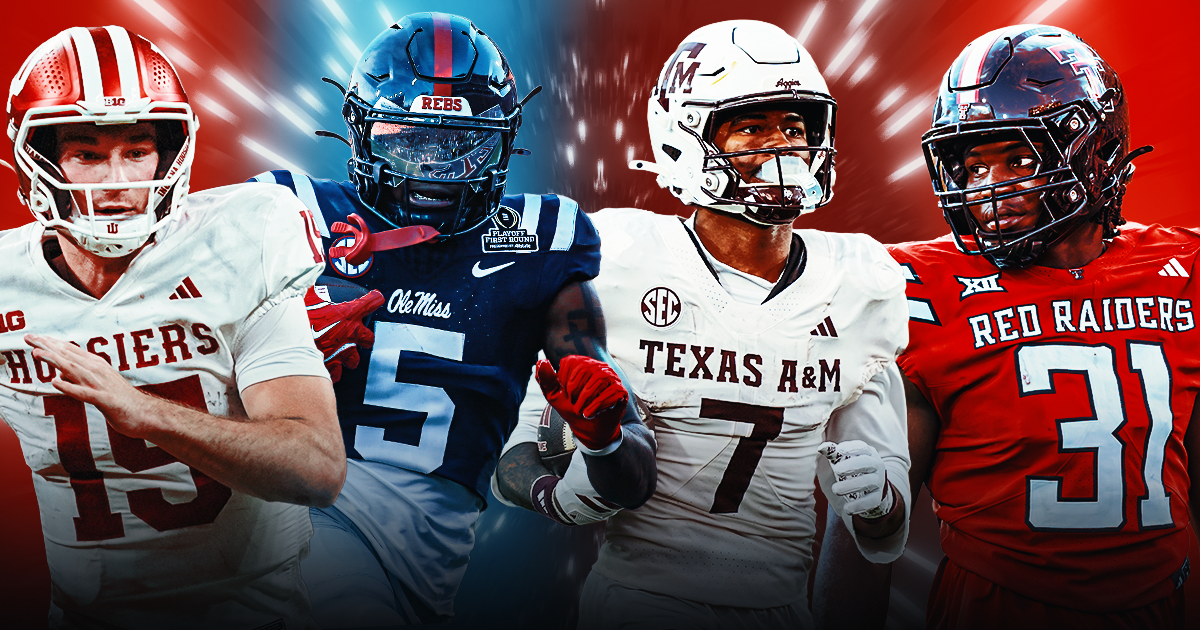
The transfer portal has continued to reshape college football, and the 2025 season showcased just how decisive elite additions can be. From defensive game-wreckers to historic offensive performances, these players didn't just supplement rosters. They defined seasons. 5. Ahmad Hardy, RB, Missouri The Louisiana Monroe transfer emerged as one of the most productive backs in the country. Hardy averaged 130 rushing yards per game and finished second nationally with 1,560 total rushing yards. He recorded eight 100-yard performances and delivered a 300-yard breakout against Mississippi State in November. Hardy scored 16 rushing touchdowns, ranking fourth nationally, and eclipsed 1,300 rushing yards for the second straight season. 4. Mansoor Delane, CB, LSU LSU's secondary took a major leap forward thanks to Mansoor Delane, who arrived from Virginia Tech and immediately became one of the SEC's top cover corners. Delane led the conference with 13 passes defended and 11 pass breakups, allowed just 13 completions for 147 yards, and did not surrender a touchdown all season. Opposing quarterbacks completed only 37.1 percent of throws into his coverage. 3. Kewan Lacy, RB, Ole Miss After transferring from Missouri, Lacy transformed the Ole Miss offense. Lacy rushed for 1,366 yards, averaged five yards per carry, and led the nation with 21 rushing touchdowns. While the Rebels' quarterback garnered much of the national attention, Lacy's consistency and scoring production powered Ole Miss' offensive balance. 2. David Bailey, EDGE, Texas Tech The most coveted defender in the portal delivered immediate results. David Bailey finished second nationally with 13.5 sacks, added 43 quarterback hurries and 20 hits, and anchored a Texas Tech defense allowing just 11.3 points per game. His impact reshaped the Red Raiders into one of the nation's stingiest units. 1. Fernando Mendoza, QB, Indiana The Cal transfer authored a historic season. Mendoza led Indiana to its first Big Ten title since 1967, an undefeated regular season, and the College Football Playoff. Mendoza completed 71.5 percent of his passes for 2,980 yards, 33 touchdowns, and six interceptions, capped by Indiana's first Heisman Trophy in program history. See the full top 10 ranking. |
|
|
How much impact players out of the 2025 transfer portal will cost your team |
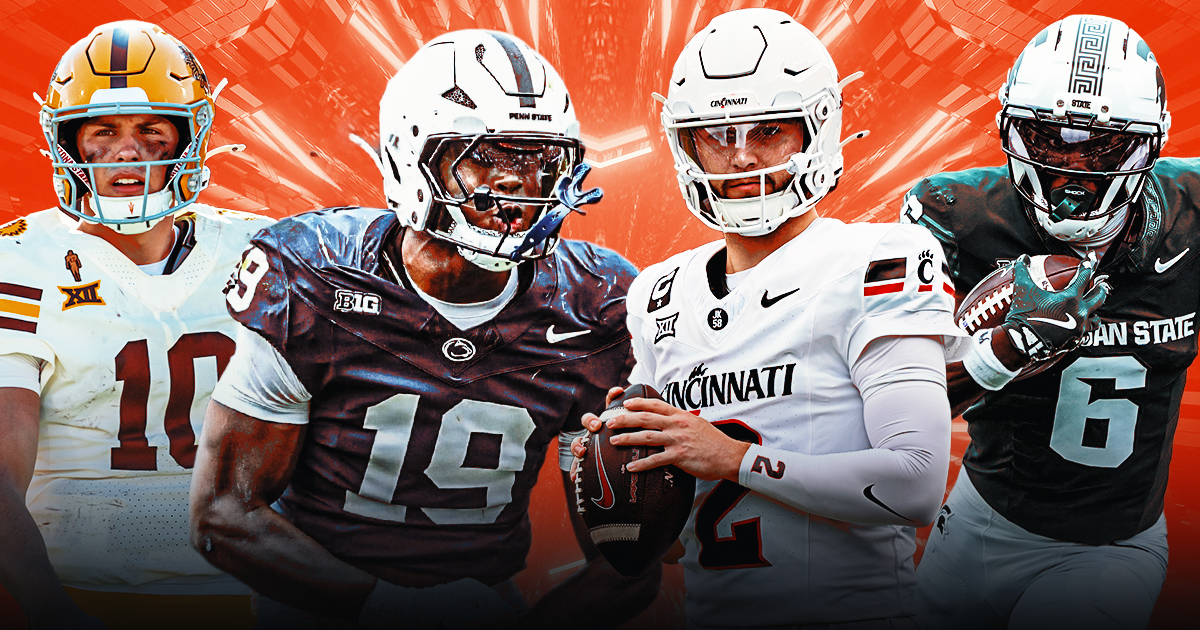
In the modern era of college football, the transfer portal has become a major piece of roster construction. As NIL spending continues to evolve, schools are increasingly forced to answer one central question: What will it cost to land program-changing talent out of the portal? That question is most pronounced at quarterback, where the top of the market is expected to climb into the $4 to $5 million range. On3 is breaking down the highest-valued positions in the transfer portal. QB market: $750K to $4 million The college football quarterback market continues to grow. At least five quarterbacks earned north of $3 million this season, and more than 20 starting quarterbacks across the country made over $1 million. The price tag for elite signal-callers continues to reach unprecedented heights. Tulane transfer Darian Mensah signed a two-year, $8 million deal last winter that could reach $10 million with incentives. Carson Beck made roughly $3 to $3.2 million to start the season at Miami. Now, the quarterback market is flooded with high-end talent, including Arizona State's Sam Leavitt, Cincinnati's Brendan Sorsby, and TCU's Josh Hoover. Sources say those deals could touch $4 to $5 million. DL market: $500K to $1.5 million Starting EDGEs and defensive linemen continue to command mid-six-figure deals, though elite talent is pushing market values higher. Stanford EDGE David Bailey earned more than $2 million this season at Texas Tech, reinforcing how important proven pass rushers have become. Schools have learned the value of acting early for game-changing defensive linemen, and the need for proven trench players is not leaving college football. The $500,000 mark now serves more as a starting point than a ceiling. Defensive tackles have typically lagged behind EDGEs, but Wake Forest's Mateen Ibirogba is expected to command a seven-figure payday, according to sources. OL market: $500K to $1.2 million The offensive line market, particularly at offensive tackle, continues to rise. Elite starting tackles typically fall in the $900,000 to $1.2 million range, and seven-figure deals are becoming more common. Last offseason, Isaiah World and Ethan Onianwa both commanded seven figures as bidding wars intensified. If schools are unable to secure commitments from offensive linemen early in the portal window, price points can escalate quickly as demand spikes. WR market: $400K to $1 million The wide receiver market has grown unevenly in recent years, with the going rate for a starting wideout generally between $700,000 and $800,000. High transfer volume at the position has led to inflated deals for top players. At least five wide receivers earned more than $1 million this season, including Auburn's Eric Singleton. Similar paydays are expected again this cycle. RB market: $350K to $1 million The running back market has continued to grow over the last two years. While opinions vary on positional value, elite backs consistently approach seven figures. Quinshon Judkins set that benchmark last season at Ohio State, and multiple running backs could earn more than $1 million out of the portal this year. DB market: $300K to $850K Defensive back remains one of the least valued positions relative to quarterback and the line of scrimmage, largely due to volume. Still, programs will spend for difference-makers, as shown when Caleb Downs transferred to Ohio State and became one of the highest-paid defenders in the sport. Read the full report from Pete Nakos. |
|
|
2026 NCAA Tournament: Bracketology projections as conference play approaches |
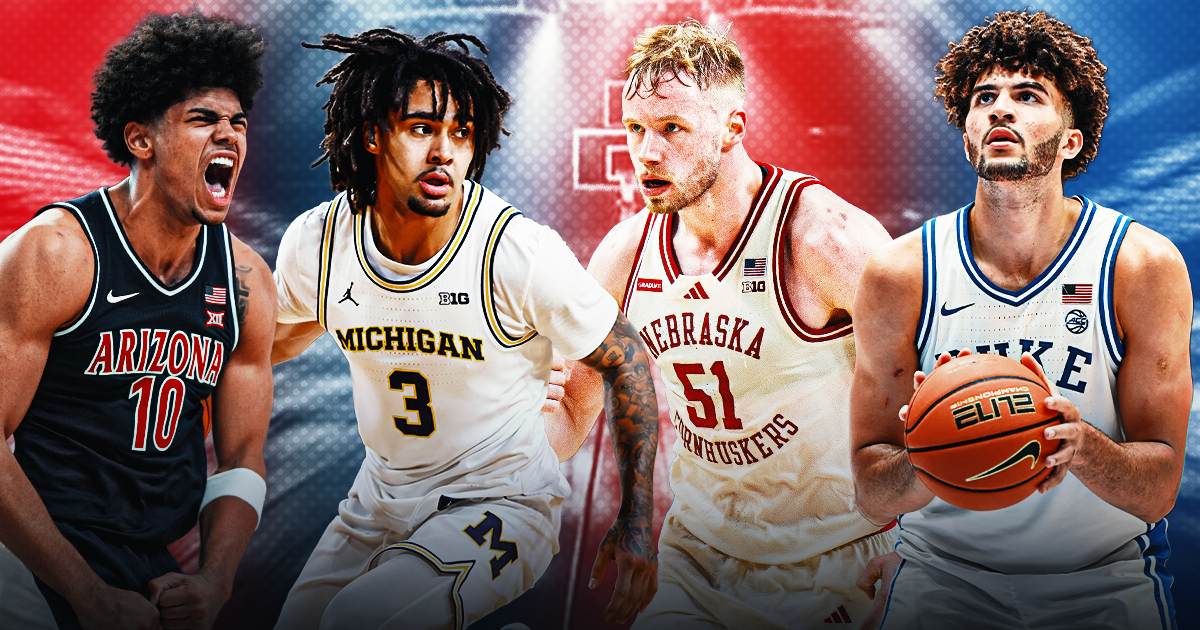
As the calendar prepares to turn and full-scale conference play approaches across college basketball, the picture is becoming clearer at the top of the NCAA Tournament board. With most teams wrapping up non-conference schedules and facing extended breaks between games, resumes are beginning to take shape. Bracketology projects how the selection committee would seed the field based on results to this point, factoring in strength of schedule, quality wins, and overall performance metrics such as the NET Rankings. Here is an updated early look at the 2026 field from On3.
Projected 1-seeds
Michigan, Arizona, Duke, and UConn headline the current 1-line as the non-conference portion of the schedule winds down. Michigan has positioned itself as the No. 1 overall seed after stacking dominant wins against high-major competition and remaining unbeaten early in Big Ten play. Arizona's strong non-conference resume has set the Wildcats up for a Big 12 run that could solidify their place at the top. Duke continues to rate well across analytics and polls despite its first loss, while UConn's steady climb reflects one of the most complete resumes in the country to this point. Last four byes Villanova, SMU, UCF, and NC State currently sit just outside the First Four, occupying valuable at-large byes. Each has built a tournament-worthy profile through non-conference play but still has work ahead in league action to avoid slipping into the bubble's danger zone. With conference schedules looming, this group represents teams that could quickly move up or slide backward depending on early results. Last four in Ohio State, Miami, Butler, and California make up the final teams currently projected into the field. These programs have done just enough to stay above the cut line, though margins remain thin. Each faces critical opportunities ahead, particularly against conference opponents, where a single win or loss could swing their tournament fate. First four out Oklahoma, Oklahoma State, Virginia Tech, and Kansas State are on the outside looking in as the season enters its next phase. While each has shown flashes of tournament-level play, inconsistencies and missed opportunities have kept them just below the line. Strong conference starts will be essential if this group hopes to force its way into the field. See the full projected bracket. |
|
|
Low: Maybe it's time to 'celebrate the Ole Miss coaches who stayed' |
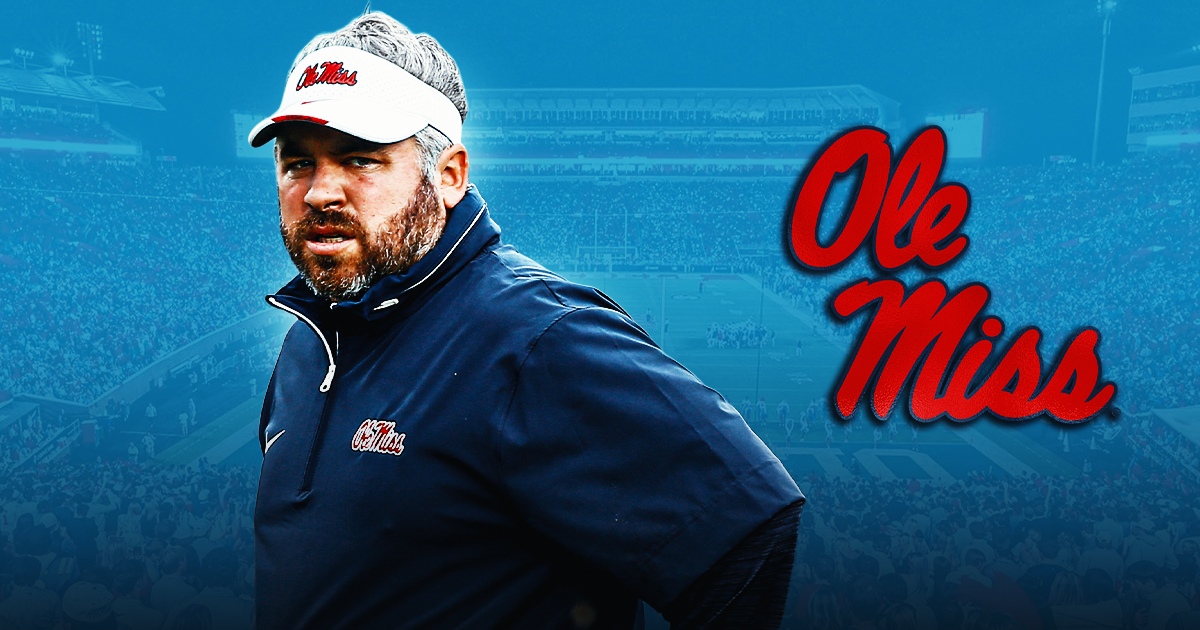
OXFORD, Miss. — Much has been made of Ole Miss coaches leaving for LSU and then returning on loan to finish the Rebels' College Football Playoff run. Nearly the entire offensive staff, at least the on-field assistants, flew back to Baton Rouge the morning after Ole Miss' 41-10 playoff win over Tulane last Saturday, then returned to Oxford on Monday morning, using the Ole Miss university plane. Through the upheaval, one high-ranking Ole Miss official told On3 it might be time to "celebrate the Ole Miss coaches who stayed and have committed to Ole Miss for the long term." On offense, quarterbacks coach Joe Judge and offensive line coach John Garrison remained. The entire defensive staff stayed as well, including newly promoted head coach Pete Golding, with the lone exception of Chris Kiffin. As convoluted as the situation sounds, Golding is committed to making it work, largely because it is what is best for the players as Ole Miss continues to make history. Golding acknowledged the coaches who left for LSU are "working two different jobs," adding that when it is not game week for the Rebels, those coaches will be "working their own job." And yet, Golding said they will be "fully invested where they're at" when Ole Miss resumes practice Friday for its Sugar Bowl matchup against Georgia. That balancing act has created uncharted territory, stretching back to the uncertainty surrounding Lane Kiffin's future in November and his eventual exit. Despite the noise, Ole Miss has continued to perform at a high level. "It wasn't really showing that all the noise didn't matter," Ole Miss receiver De'Zhaun Stribling said following the Rebels' first game without Kiffin. "It was more about going out there and doing what we do. We played at a high level all season, so nothing's going to change. Just because we're in the playoffs, we're not going to play the game different or call the game different. We're going to play our ball, and we play ball at a high level." Inside the program, much of that stability has been attributed to Judge's presence. A former NFL head coach with the New York Giants and a three-time Super Bowl winner as part of Bill Belichick's staff in New England, Judge came to Ole Miss as an offensive analyst before moving to quarterbacks coach and playing a key role in Trinidad Chambliss' rise. Judge had opportunities to leave both last year and again this offseason. But, he recently signed a contract extension and spoke plainly about his commitment. "I love being in Mississippi. I love being in Oxford. I love these players. The university has been tremendous. The fans have been great to me and my family. Why would I want to leave here?" Judge said. Golding has leaned on Judge's experience during his early days as head coach. "I'm not dumb enough to think I'm the smartest guy in the building," Golding said. "That's the first thing I learned from my old man as a head coach, that you better hire people smarter than you." For Judge, the focus has remained on the players amid the uncertainty. "You see a team that plays for each other," Judge said. "You see a team that's very accountable to each other, and they work extremely hard." And through all the comings and goings, Judge said one truth has not changed. "You can fire every coach," Judge said. "Who are you going to coach if there are no players?" "There's a lot of talented teams in this country that are sitting home watching teams play right now," he added. "But they don't have a team." Read the full article from Chris Low. |
|
|
Below, you'll find 3 facts about a random college football player. You'll try to guess who the player is based on the facts. Let's go. I was a three-sport high school athlete who set multiple school records in baseball, was drafted by the San Diego Padres, and left pro baseball to give college football a shot.
- I walked on at Colorado, became the starting quarterback, set numerous school records, won my conference's Offensive Player of the Year award, and saw my career end after a severe concussion.
- After football, I transitioned into media and became a lead college football analyst and studio voice on FOX.
Answer at the bottom. |
|
|
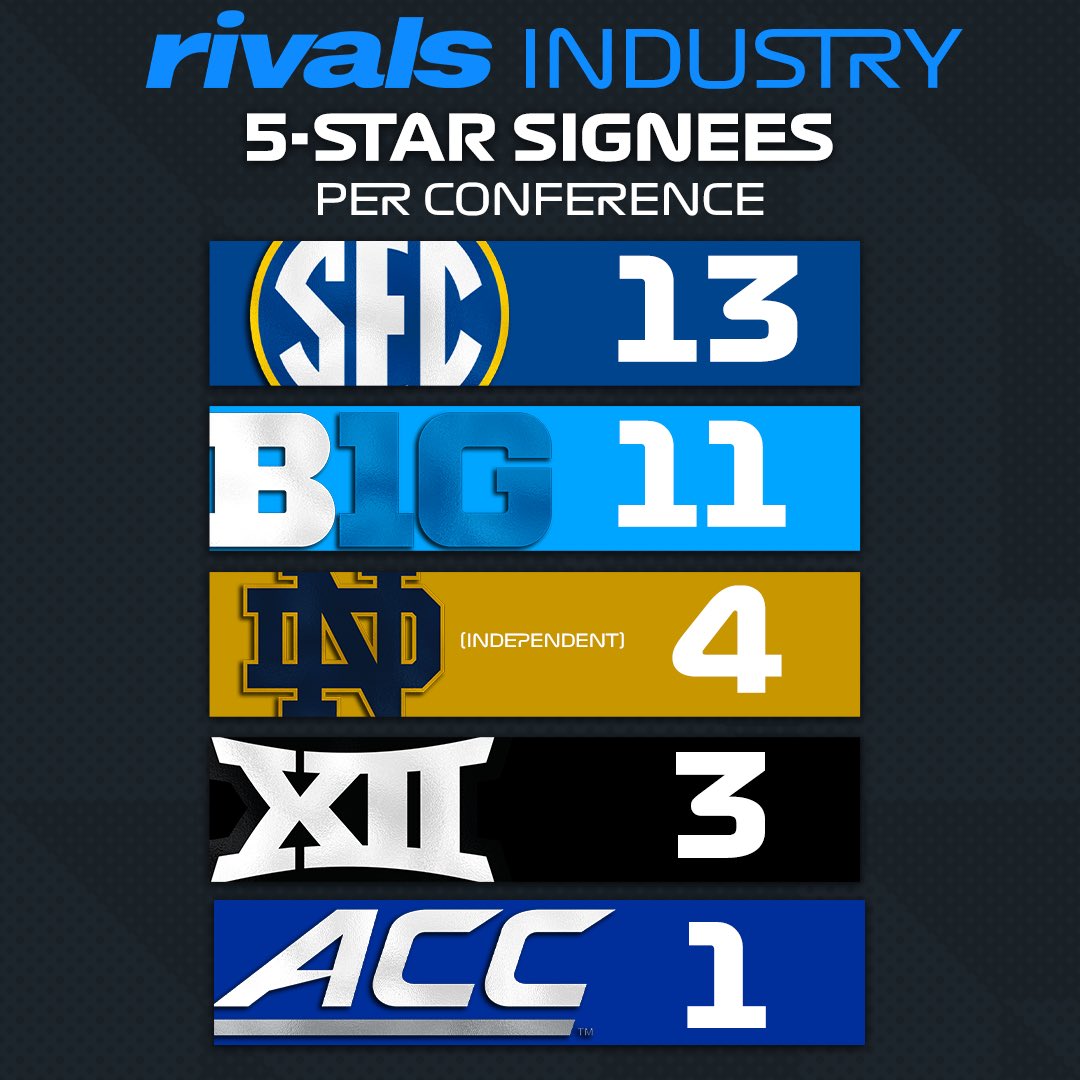
How many 5-star players signed to each conference in 2025 |
|
|
🦬 Joel Klatt, QB, Colorado Buffaloes (2002-2005) |
|
|
Join now to unlock the best of college and high school sports from our trusted team of insiders. Join for $1. Cancel anytime. |
|
|
Not subscribed to On3? Subscribe here for all the news and analysis from our network of insiders. |
2970 Foster Creighton Drive, Nashville, TN 37204 |
©2025 On3 Media. All rights reserved. |
|
|
|





No hay comentarios:
Publicar un comentario